Dzongri Trek vs Goechala Trek: Which One Should You Choose?
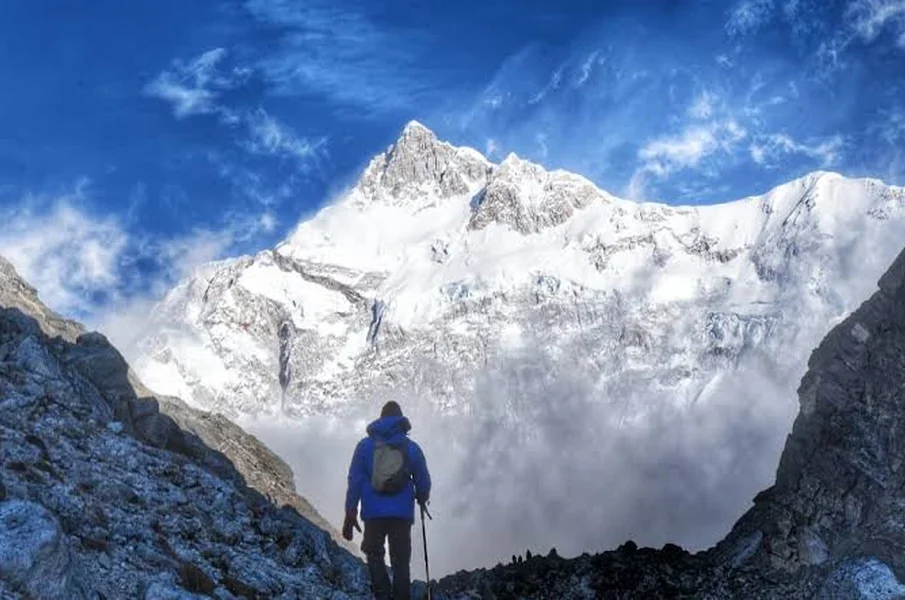
Short on time? Choose the Dzongri trek. It is a moderate 5 to 6 day walk from Yuksom to Dzongri Top (around 4,200 m) with a wide Kanchenjunga panorama. Pick the Goechala trek if you have 9 to 11 days, want a bigger challenge, and want the classic close-up view of Kanchenjunga from Viewpoint 1 (around 4,600 m). Same trail start, very different commitment.
Dzongri trek vs Goechala trek: what is the real difference?
Both treks start at Yuksom in West Sikkim and share the exact same trail up to Dzongri. The Goechala trek simply keeps going, deeper into Khangchendzonga National Park, to a higher sunrise viewpoint. So Dzongri is not a smaller version of Goechala. It is the first half of the same route, done as a complete trip on its own.
If you have about a week, Dzongri gives you most of the big mountain views for far less effort. If you want the full expedition feel and the famous sunrise on Kanchenjunga’s east face, the extra days on Goechala earn their keep.
Quick comparison at a glance
| Feature | Dzongri Trek | Goechala Trek |
|---|---|---|
| Duration | 5 to 6 days | 9 to 11 days (usually 10) |
| Distance (round trip) | Around 46 km | Around 90 km |
| Highest point | Dzongri Top, ~4,200 m | Viewpoint 1, ~4,600 m |
| Difficulty | Moderate | Moderate to difficult |
| Start point | Yuksom, West Sikkim | Yuksom, West Sikkim |
| Typical cost (Indians) | Rs 9,000 to 16,000 | Rs 18,000 to 28,000 |
| Best for | First-timers, short trips | Fit trekkers wanting the full view |
Costs, distances and altitudes are typical figures as of 2026 and vary by operator, group size and season.
How many days does each trek take?
Dzongri runs 5 to 6 days round trip from Yuksom. Goechala runs 9 to 11 days, most often 10. Both follow the same early stages: Yuksom to Sachen, then Tshoka, then Dzongri.
After Dzongri, the Goechala route pushes on to Thansing and Lamuney before the pre-dawn climb to the viewpoint. That last stretch is where the extra four or five days go.
Which trek is harder?
Goechala is clearly the tougher one. You spend more nights above 3,600 m, walk longer days, and make a cold, dark, early-morning summit push to reach the viewpoint. Altitude sickness is a real risk on the upper section.
Dzongri is graded moderate. There are steep climbs, especially the long haul to Tshoka, but you sleep lower and finish sooner. If this is your first Himalayan trek, Dzongri is the safer place to start. Either way, a few weeks of fitness prep helps a lot.
What do these treks cost in 2026?
For Indian trekkers, Dzongri packages usually run from about Rs 9,000 to Rs 16,000 per person, and Goechala from about Rs 18,000 to Rs 28,000 per person (as of 2026). Price depends on group size, the operator, food and gear included, and the season.
The park entry and trekking permit itself is a small part of this, roughly Rs 700 per person net for Indians. Most of the cost covers your guide, porters or pack animals, tents, meals and transfers. Bigger groups almost always pay less per head.
Do you need permits and a guide?
Yes, for both. Both routes run inside Khangchendzonga National Park, so a registered local guide and a park entry permit are mandatory, and you cannot trek solo or unregistered. Your operator arranges the permit in Yuksom before you set off.
- Indian trekkers: Carry an original government photo ID (Aadhaar, Voter ID or passport). You do not need a separate Inner Line Permit for these two routes.
- Foreign nationals: You need a special trek permit arranged in Gangtok, and at least two people are required to process it. Reach Yuksom a day early to sort this out.
One thing worth knowing: since 2017, Goechala trekkers are allowed only up to Viewpoint 1. The actual pass saddle is closed to protect snow leopard habitat. The sunrise view from Viewpoint 1 is still the one you have seen in photos, so you are not missing the highlight.
When is the best time to go?
There are two clear windows. March to May brings rhododendron blooms and milder days, while October to early December brings the crispest air and the sharpest mountain views. Skip the June to September monsoon, when leeches, mud and cloud cover ruin both the trail and the views.
- For flowers and colour: Late March to May.
- For the clearest Kanchenjunga views: Mid October to early December.
So which trek should you choose?
- Choose Dzongri if: You have under a week, it is your first high trek, you are travelling with older parents or kids, or you want strong views without a long grind.
- Choose Goechala if: You have 10 days or more, you are reasonably fit, you have trekked at altitude before, and the Kanchenjunga sunrise is your main reason for coming.
Frequently asked questions
Is Dzongri part of the Goechala trek?
Yes. Dzongri sits on the same trail as Goechala. Every Goechala trekker passes through Dzongri, so you can treat Dzongri as a shorter trip that ends there.
Can a beginner do the Goechala trek?
It is possible but not ideal. Goechala suits people with prior altitude trekking and good fitness. Beginners are usually better off starting with Dzongri.
Which trek has better Kanchenjunga views?
Goechala’s Viewpoint 1 gives the closest, most dramatic view. Dzongri Top offers a wide panorama that most people still find more than enough.
Do I need to be trained to trek Dzongri?
No formal training, but build stamina for a few weeks with walking, jogging or stair climbing. The climb to Tshoka is the hardest part.
How cold does it get?
Nights at the higher camps can drop below freezing, especially in late autumn and winter. Pack proper layers, a warm sleeping bag and gloves for both treks.
Is there a mobile network on the trek?
Expect a signal only around Yuksom. Once you start climbing, assume you are offline, so tell your family your plan before you leave.
Still deciding between the two, or ready to lock your dates? Explore more Sikkim trek guides, permits and planning help at https://sikkimtourism.org/ and plan your trip with a local team that knows these trails firsthand.